Hurricane season is a familiar part of life in North Florida, but storm preparation involves more than protecting windows and stocking up on supplies. Existing yard debris and other loose materials around a property can become hazards in high winds. Planning for pre-storm debris removal can help reduce potential damage while leaving homeowners with less to manage after the storm.
Pre-Storm Cleanup vs. Post-Storm Recovery: What’s the Difference
Pre-storm debris removal focuses on clearing existing yard waste and loose materials before severe weather arrives. The goal is to reduce hazards and limit what the storm has to work with.
Post-storm recovery is a different process. Once a storm passes, properties often have a mix of new damage, displaced materials and debris that may include contaminated or structurally compromised materials. Marpan supports both stages of the storm cycle. For guidance on handling debris after a hurricane, visit Hurricane Debris Recycling: A Step Toward Recovery.
Why Pre-Storm Debris Planning Matters
When strong winds arrive, materials that are manageable under normal conditions can create problems around a property. High winds can scatter stacked yard waste or carry unsecured outdoor items into surrounding areas.
Clearing existing debris can also make it easier to assess your property after severe weather. With old yard waste and other materials already out of the way, homeowners can more easily identify what was affected by the storm and what needs attention during recovery.
Walk Your Property Before the Season Starts
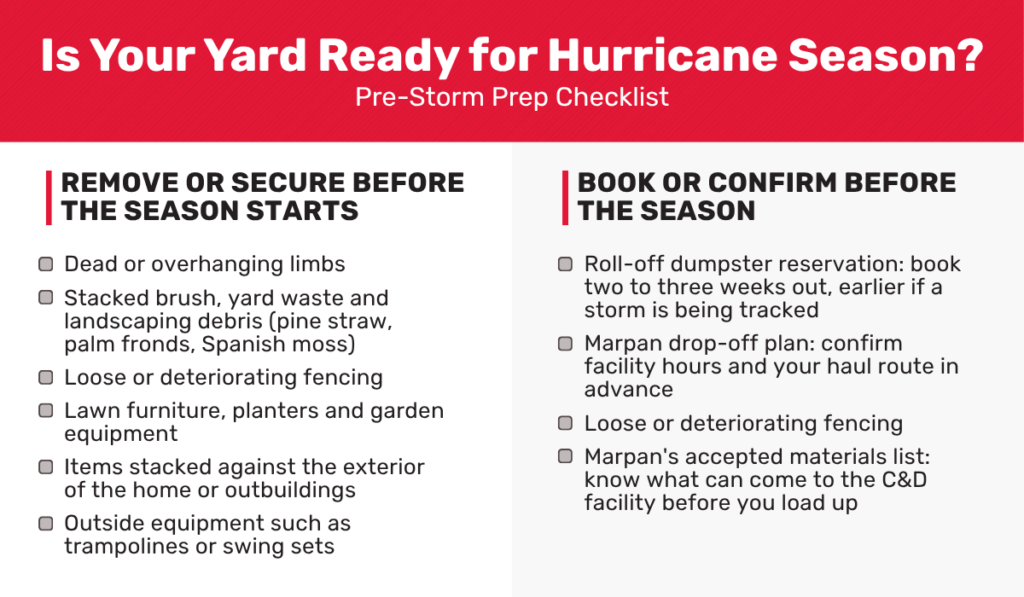
Before hurricane season, walk your property to identify materials that could become hazards during severe weather.
Step 1: Check trees near your home.
Look for dead or overhanging limbs near structures or rooflines. Limbs that could interfere with utility lines may require help from a qualified professional or the utility company rather than attempting to remove them yourself.
Step 2: Inspect fencing.
Look for damaged or deteriorating sections that could collapse or break apart in strong winds. Repair or remove materials that are already loose.
Step 3: Remove loose yard materials.
Clear lightweight or unsecured materials that could be scattered by high winds, including piles of loose landscaping debris or pine straw stored outdoors.
Step 4: Make a plan for outdoor belongings.
Identify furniture, recreational equipment and other outdoor items that will need to be secured or moved when severe weather is expected.
Plan for Debris Removal in Advance
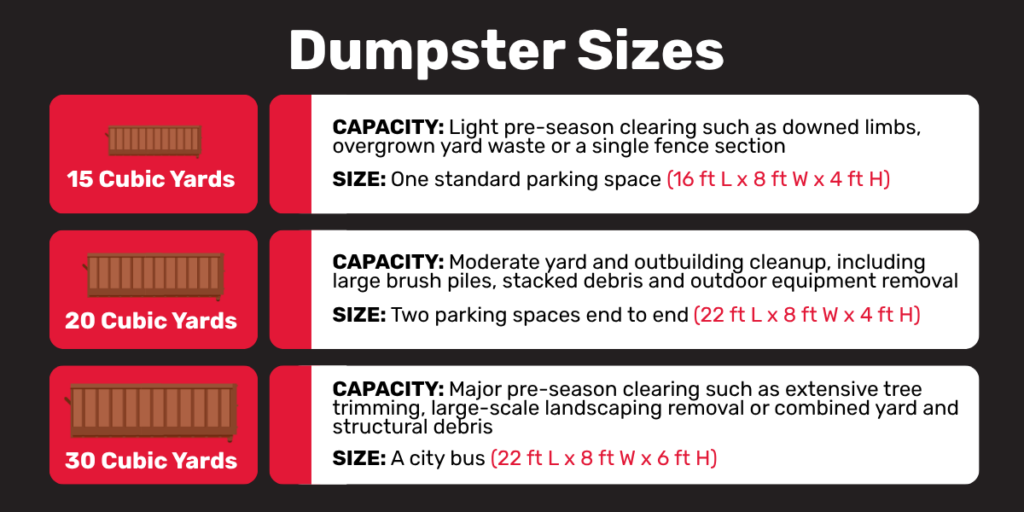
If pre-storm debris removal generates more material than you can easily haul away, consider how you will handle it before demand increases. A roll-off dumpster can be useful for larger projects, such as extensive tree trimming, landscaping work or removing damaged outdoor materials. Dumpster availability can become limited as severe weather approaches, making early scheduling especially important.
Homeowners planning to haul debris themselves should confirm the drop-off location and facility hours in advance. For those considering a dumpster, Marpan’s online size estimator can help determine which container is appropriate for the amount of debris being removed.
If extensive cleanup is needed, homeowners should aim to schedule roll-off dumpster delivery at least two to three weeks before the peak of storm season, and even earlier if a named storm is being tracked. In the 48 to 72 hours before a storm makes landfall, dumpster availability can drop significantly as demand increases across the region. Booking early can help avoid scheduling delays and the stress of coordinating debris removal when time is limited.
What You Can Bring to Marpan Anytime, Not Just After a Storm
Marpan’s C&D recycling facility accepts yard waste and construction and demolition materials throughout the year, giving homeowners an option for pre-storm debris removal as well as routine property maintenance.
Accepted materials include:
- Vegetative debris: Fallen limbs, brush and other yard waste
- Construction and demolition debris: Wood, drywall, roofing and fencing
Materials that are not accepted include:
- Household garbage
- Hazardous materials such as paint or chemicals
- Televisions and computer monitors
- Liquids of any kind
If you are unsure whether a material is accepted, contact the team before bringing it to the facility.
Frequently Asked Questions
Do I need to throw away outdoor furniture and planters before a storm?
Not necessarily. Outdoor items that are still in good condition can be moved to a secure location when severe weather is expected. Pre-season cleanup is an opportunity to remove unwanted debris while making a plan for anything that will need to be secured later.
Can I put yard debris and construction materials in the same dumpster?
Eligible vegetative debris and construction and demolition materials can both be accepted at the C&D recycling facility. Before combining materials in a rented container, confirm what can be included in your specific load and keep prohibited materials out.
What should I do with paint or chemicals I find while cleaning up my property?
Hazardous materials such as paint and chemicals should be kept separate from debris taken to Marpan’s C&D recycling facility. The facility does not accept liquids, chemicals, cleaners, paint thinner or other toxic materials. Check local guidelines for an appropriate disposal option for these items.
For large cleanups, how far in advance should I schedule a dumpster before hurricane season?
Scheduling two to three weeks ahead is a reasonable target for most homeowners. If a named storm is being actively tracked, availability can tighten quickly. Early scheduling is the best way to ensure a container is available when you need it.
Are there weight limits for roll-off dumpsters?
Yes. Marpan’s 15- and 20-yard roll-off dumpsters include up to three tons of material in the rental price, while the 30-yard dumpster includes up to four tons. Additional fees apply when a load exceeds the included weight.
Can I put tree stumps or large logs in a dumpster?
Yes. Tree stumps are an accepted material for rented dumpsters, along with other types of yard waste including large tree limbs, branches, leaves, grass clippings and trunks.
What if my debris includes materials that may have been contaminated by floodwater?
If you are unsure whether materials were affected by floodwater, contact Marpan before bringing them to the facility. Certain contaminated materials may fall outside what our facility is equipped to accept, and the team can help you identify the appropriate disposal option.
About Marpan
Since 1966, Marpan has helped homeowners, businesses and communities throughout Tallahassee and North Florida manage waste and recover recyclable materials. With a state-of-the-art recycling facility that recovered more than two billion pounds of material between 2008 and 2024, Marpan is committed to keeping valuable materials out of the landfill and supporting a cleaner community.
Marpan provides year-round options for homeowners clearing yard waste and other accepted debris from their properties. Accepted materials can be brought directly to the recycling facility, while a roll-off dumpster may be a better fit for larger property cleanup projects. Because Marpan does not offer same-day dumpster delivery, homeowners should plan ahead when scheduling a container. Contact the team to request a dumpster quote and learn more about the company’s recycling capabilities.