Recycling should feel simple: Place an empty bottle, clean sheet of paper or aluminum can in the bin and give it a chance to become something new. In the first installment of Debunking the Most Common Recycling Myths, Marpan explained why recycling does not simply go to the landfill and why the recycling symbol alone does not determine whether an item belongs in a local bin. However, many well-intentioned recyclers still rely on outdated advice about specific materials, which can increase contamination or cause recyclable items to be thrown away.
Accurate guidance matters as communities work to recover more usable material. The U.S. Environmental Protection Agency has established a national goal of increasing the recycling rate to 50% by 2030. Reaching that goal depends in part on understanding what local programs can process. Here are seven more common recycling myths that may be causing confusion at home. Because recycling requirements vary by location, the guidance below provides general best practices. Always confirm how specific materials should be handled through your local recycling program.
Common Recycling Myths
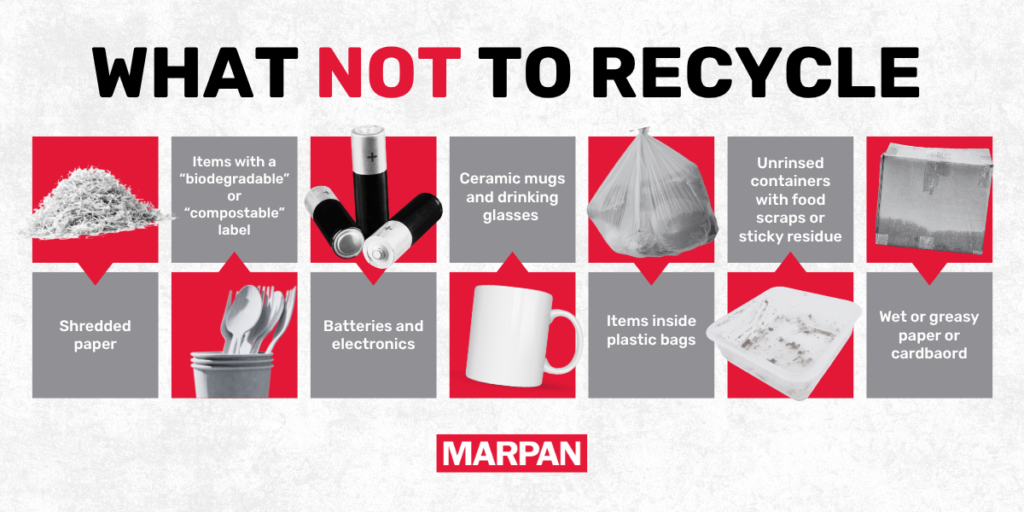
Myth: Shredded paper belongs in the recycling bin.
Truth: Shredded paper is rarely accepted in curbside bins and can do more harm than good.
Here’s the Reality
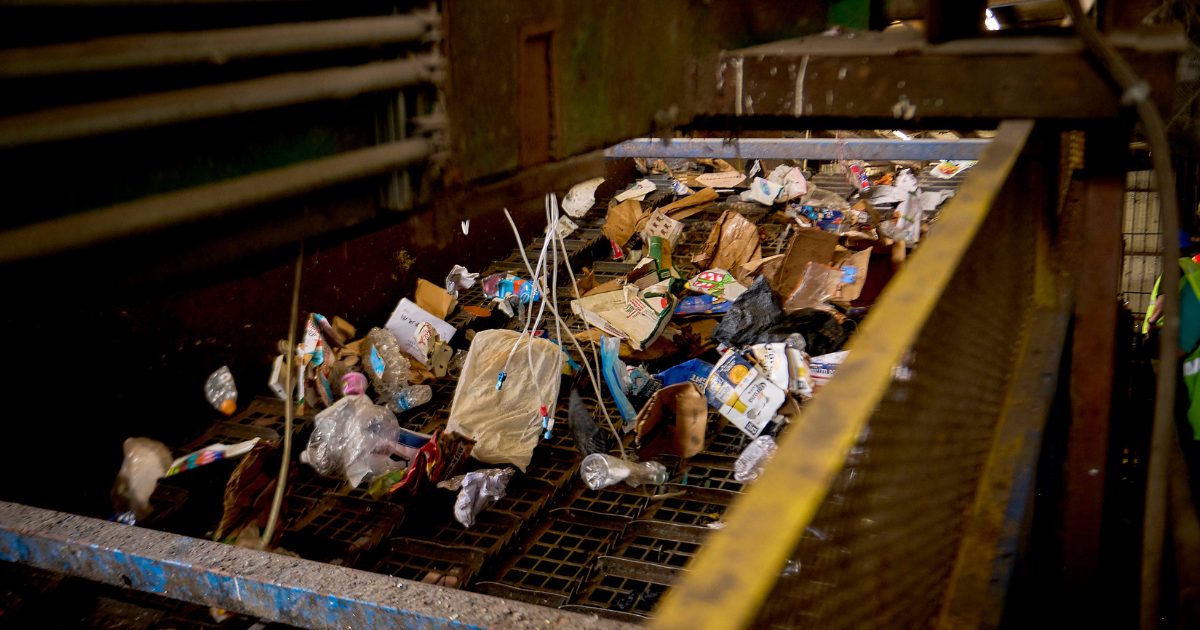
- Small pieces are difficult to sort. Shredded paper falls through the sorting screens at most material recovery facilities.
- Loose shreds can contaminate other recyclables. Small pieces of paper can scatter throughout a load and mix with glass, plastic and other materials during processing.
- Whole paper and shredded paper are handled differently. Although many curbside programs accept office paper, newspapers and other paper products, they may reject those same materials once they have been shredded.
The Bottom Line
Keep shredded paper out of your curbside bin unless your local recycling program specifically accepts it. Instead, look for community shredding events, specialty drop-off locations or local composting options.
Myth: Bottle caps belong in the trash, not the recycling bin.
Truth: Most bottle caps are recyclable, but only if they stay on the container.
Here’s the Reality
- Caps and bottles may be made from different plastics. Although these materials are not always the same, many modern recycling facilities can separate them during processing.
- Loose caps are difficult to recover. Because bottle caps are small, they can fall through sorting equipment and may not reach the correct recycling stream.
- Many programs ask residents to replace the cap. Keeping the cap screwed onto an empty bottle makes it easier for both materials to move through the sorting process together.
The Bottom Line
In Tallahassee and Leon County, residents should empty and rinse accepted containers, then leave the lids attached before placing them in the recycling bin.
Myth: Batteries and electronics can go in curbside recycling.
Truth: Batteries and electronics require specialized handling and should not be placed in curbside recycling bins.
Here’s the Reality
- Batteries can cause fires. Lithium-ion batteries may become damaged during collection or sorting, creating sparks that can ignite other materials in recycling trucks and facilities.
- Electronics require specialized processing. Devices contain components and materials that must be safely dismantled and handled by facilities equipped to process electronic waste.
- Separate collection options are available. Many communities provide designated drop-off locations or collection events for batteries and electronic waste.
The Bottom Line
Never place batteries or electronics in a curbside recycling bin. Tallahassee and Leon County residents can take these items to one of Leon County’s designated Household Hazardous Waste drop-off locations for proper handling.
Myth: A “biodegradable” or “compostable” label means an item is recyclable.
Truth: Biodegradable and compostable materials are not the same as recyclable materials.
Here’s the Reality
- The labels describe different processes. Recyclable materials are reprocessed into new products, while biodegradable and compostable materials are designed to break down under certain conditions.
- Many compostable products require specialized facilities. Some materials only break down properly in industrial composting facilities and may not be suitable for backyard composting.
- Compostable packaging can contaminate recycling. These products may look like conventional plastic but cannot be processed in the same way, potentially affecting other recyclable materials in the batch.
The Bottom Line
Do not place an item in the recycling bin based only on a biodegradable or compostable label. Follow the disposal instructions on the packaging and check whether an appropriate composting program is available in your area.
Myth: Ceramic mugs and drinking glasses belong in the bin with glass bottles and jars.
Truth: Ceramics and drinking glasses should not be placed in the recycling bin with glass bottles and jars.
Here’s the Reality
- Not all glass is made the same way. Ceramics, drinking glasses and window glass have different compositions and melting points than the glass used for food and beverage containers.
- These materials can contaminate recyclable glass. When ceramics or other types of glass become mixed with bottles and jars, they can create defects during reprocessing and affect the quality of the recycled material.
- Broken glass can create safety hazards. Sharp pieces can injure collection and sorting workers or damage equipment at recycling facilities.
The Bottom Line
Only place accepted glass bottles and jars in your curbside recycling bin. Ceramic mugs, drinking glasses, window glass and broken glass should be kept out and disposed of according to local guidelines.
Myth: Materials can only be recycled once.
Truth: Many materials can be recycled multiple times before they lose their quality.
Here’s the Reality
- Aluminum and glass can be recycled repeatedly. These materials can be reprocessed into new products again and again without significantly losing their quality.
- Paper has a limited recycling life. Each time paper is recycled, the fibers become smaller and more damaged. After about five to seven recycling cycles, they can no longer bond together effectively to create a strong, durable sheet of new paper.
- Plastic generally wears out sooner. Many plastics lose quality each time they are reprocessed, but some can still be recycled more than once.
The Bottom Line
A material does not have to be infinitely recyclable for recycling to make a difference. Recycling items correctly can conserve raw materials and keep usable material out of the landfill.
Myth: Aerosol cans are never recyclable.
Truth: Some aerosol cans can be recycled, but acceptance depends on the local recycling program.
Here’s the Reality
- Many aerosol cans are made from recyclable metals. The steel or aluminum used to make these containers can often be recovered and reprocessed when the cans are accepted by a local program.
- The can must be completely empty. Aerosol cans containing any remaining product may be pressurized and require specialized handling as household hazardous waste.
- Curbside recycling rules vary. Some programs accept empty aerosol cans with other metal containers, while others require residents to use a separate drop-off location.
The Bottom Line
Only place a completely empty aerosol can in your curbside bin if the program accepts it. Never puncture, crush or attempt to empty the can manually. Aerosol cans that still contain product should be taken to a household hazardous waste facility.
Frequently Asked Questions
Can shredded paper go in my curbside recycling bin?
Shredded paper is not accepted by most curbside recycling programs because the small pieces can fall through sorting equipment and mix with other materials. Look for a local shredding event, specialty drop-off location or composting option instead.
Should I leave bottle caps on or take them off before recycling?
Many recycling programs ask residents to leave plastic caps attached to empty bottles because loose caps are too small for sorting equipment to recover effectively. Empty and rinse the bottle, replace the cap and follow your local program’s instructions.
Can I put old batteries or electronics in my recycling bin?
No. Batteries can create fire hazards, while electronics contain components that require specialized handling. Take these items to a designated battery or electronic waste collection site.
Does a biodegradable or compostable label mean something can be recycled?
No. These labels describe how a product is designed to break down, not whether it can be processed by a recycling facility. Follow the disposal instructions on the package and use an appropriate composting program when one is available.
Can I recycle a ceramic mug or drinking glass with my bottles and jars?
No. Ceramics and drinking glasses have different compositions and melting points than container glass. Mixing them with recyclable bottles and jars can affect the quality of the processed glass.
Debunking Recycling Myths to Recycle Smarter
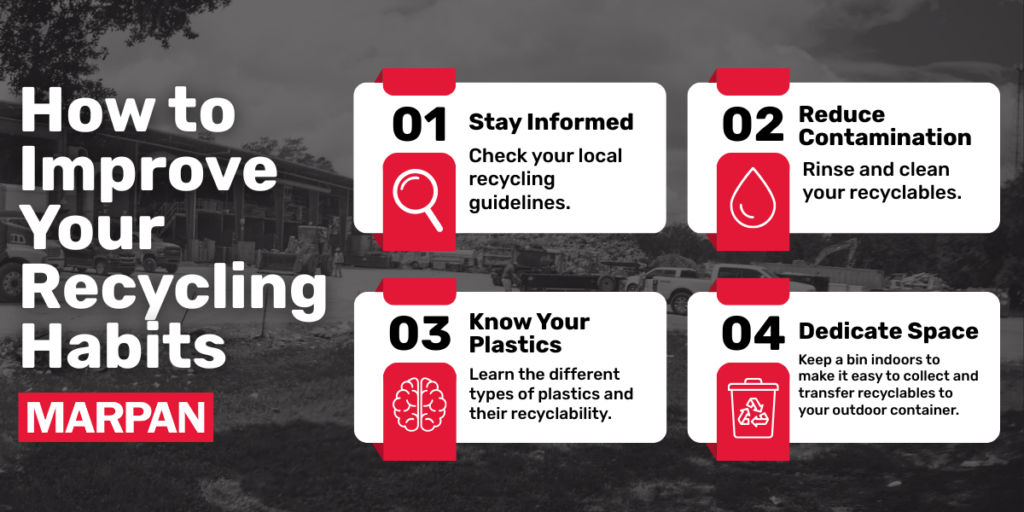
Still unsure what’s recyclable in your area? Believing outdated or incorrect information can actually do more harm than good, contaminating recycling streams and sending otherwise recyclable items to the landfill. Don’t guess; get accurate answers from your local recycling program. Most centers offer up-to-date lists of accepted materials and tips on how to prepare items.
Recycle Smarter With a Local Guide
Tallahassee and Leon County residents can download Marpan’s local recycling guide for a quick overview of what belongs in the bin.
About Marpan
Marpan has led Tallahassee and North Florida in dumpster rentals, debris management and the processing of residential and commercial recyclable materials since 1966. Between 2008 and 2022, our recycling facility has recovered more than two billion pounds of material that would have otherwise been buried in a landfill. Our partnerships, long-time commitment to recycling and state-of-the-art facilities allow us to make a difference in our community every day. For more information on how and what we recycle, explore our services.