Businesses generate waste differently depending on their industry, building size and day-to-day operations. A restaurant managing food waste and cardboard boxes may have very different disposal needs than a construction company handling demolition debris or an office building with predictable daily trash volume. The EPA estimates that commercial waste accounts for roughly 45% of municipal solid waste in the United States, making efficient waste management an important operational consideration for many businesses. Choosing the right waste solution can help businesses improve efficiency, maintain cleaner properties and better manage disposal costs over time.
For many businesses, the decision often comes down to dumpsters versus compactors. While both are designed to collect and manage waste, they function differently and are suited for different operational needs. Dumpsters are often a flexible and cost-effective solution for businesses with moderate or temporary waste needs, while compactors are typically designed for businesses generating larger volumes of waste consistently. Understanding these differences can help businesses select a waste management solution that supports cleaner operations, improved organization and long-term efficiency.
Understanding the Difference Between a Dumpster and a Compactor
What Is a Dumpster?
Dumpsters are the most common commercial solution for routine waste collection and disposal. They are designed for scheduled pickup and come in different configurations depending on the type of waste being generated.
Front Load Dumpsters: Used for ongoing, predictable waste generation in everyday business operations. Key characteristics include scheduled, recurring pickup service, multiple size options based on volume needs, and suitability for consistent, steady waste output. They are commonly found at:
- Restaurants
- Retail stores
- Office buildings
- Apartment complexes
Roll Off Dumpsters: Used for temporary projects that generate large or bulky waste. Key characteristics include open-top containers for easy loading, a design suited for heavy or bulky debris, delivery and removal based on project timelines, and short-term high-capacity waste storage. They are ideal for:
- Construction projects
- Demolition work
- Remodels
- Large cleanouts
What Is a Compactor?
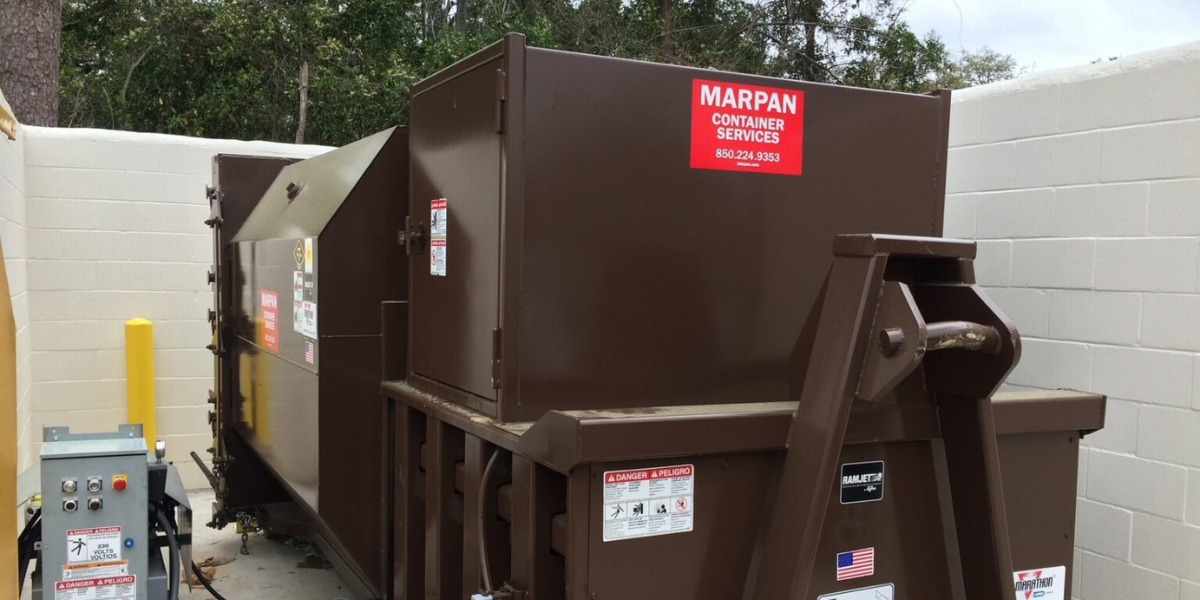
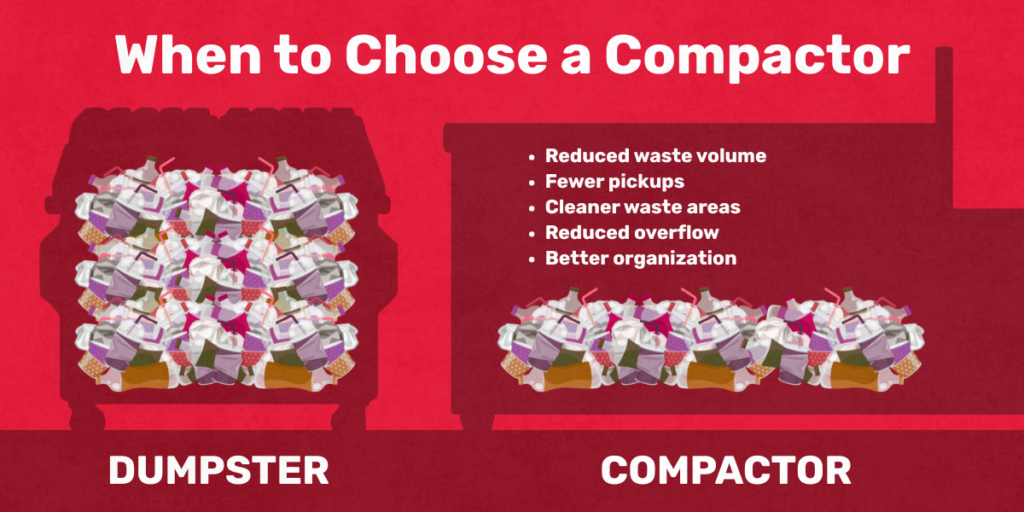
Compactors are commercial waste systems designed to compress trash, so it takes up significantly less space inside the container. Key benefits include reducing waste volume through compaction, helping prevent overflowing containers, reducing pickup frequency and hauling costs, improving cleanliness and site organization, and increasing overall waste-handling efficiency. This makes them especially useful for businesses that generate high volumes of waste every day such as:
- Grocery stores
- Hotels
- Manufacturing facilities
- Distribution centers
Compactors are especially effective in environments where packaging materials, cardboard, and consistent commercial waste are produced in large quantities. By compressing waste on-site, businesses can streamline operations and maintain a more organized facility.
Businesses That Typically Benefit from Dumpsters
Ideal Businesses for Front Load Dumpsters
Front load dumpsters are often a practical solution for businesses that generate predictable amounts of daily waste and need routine scheduled service. Restaurants, small retail stores, office buildings and apartment complexes commonly use front load dumpsters because they provide a reliable, cost-effective option for ongoing waste collection without taking up excessive space on the property. Businesses can also select container sizes and pickup schedules based on their operational needs, making front load dumpsters a flexible solution for companies managing consistent weekly waste volume.
Ideal Businesses for Roll Off Dumpsters
Roll off dumpsters are commonly used for temporary projects that generate large amounts of bulky debris or waste over a short period of time. Construction and demolition projects, commercial remodels, major property cleanouts and seasonal business cleanups often rely on roll off containers because they can handle larger materials that may not fit in standard commercial dumpsters. Their open-top design also makes them easier to load with construction debris, discarded materials and oversized waste during fast-moving projects.
Advantages of Dumpsters
Dumpsters are often a cost-effective and flexible waste solution for businesses that need reliable waste collection without the higher investment associated with compactors. They are relatively simple to set up and maintain, available in multiple sizes and can be used for both ongoing commercial service and temporary projects. Roll off dumpsters also provide businesses with the flexibility to increase waste capacity during renovations, construction projects or seasonal cleanups without committing to a permanent waste management system.
Potential Drawbacks
While dumpsters are a practical solution for many businesses, they may become less efficient for companies generating large amounts of waste on a daily basis. Businesses with high waste volume may require more frequent pickups, which can increase operational costs over time. Dumpsters can also overflow during busy seasons or large projects if container size and pickup schedules are not adjusted appropriately. In some cases, roll off dumpsters may require additional space on the property because of their larger size and truck access requirements.
Businesses That Typically Benefit from Compactors
Ideal Industries for Compactors
Compactors are often the better solution for businesses that generate large amounts of waste consistently throughout the week. Grocery stores, manufacturing facilities, hotels, large restaurants and distribution centers commonly use compactors because they help manage high volumes of cardboard, packaging materials and general waste more efficiently. Businesses with limited waste enclosure space may also benefit from compactors because compressing waste allows containers to hold significantly more material before requiring pickup. For businesses in hospitality or food service industries, compactors can also help maintain cleaner waste areas by reducing overflow, controlling odors and minimizing pest issues around the property.
Advantages of Compactors
One of the primary advantages of compactors is their ability to compress waste and maximize available container space, which can help businesses reduce pickup frequency and better manage high-volume waste output. Compactors can also create cleaner, more organized waste areas by helping prevent overflow and minimizing loose debris around the property. In many cases, compactors help improve operational efficiency by creating a more streamlined waste management process for businesses generating large amounts of trash or cardboard consistently.
Potential Drawbacks
While compactors can provide significant efficiency benefits for high-volume businesses, they often involve a higher upfront investment or rental cost than traditional dumpsters. Many compactors also require access to electrical power and additional installation planning depending on the property layout. For businesses with lower or inconsistent waste output, a compactor may not provide enough operational benefit to justify the added expense, making traditional dumpster service the more practical solution.
Key Factors to Consider Before Choosing
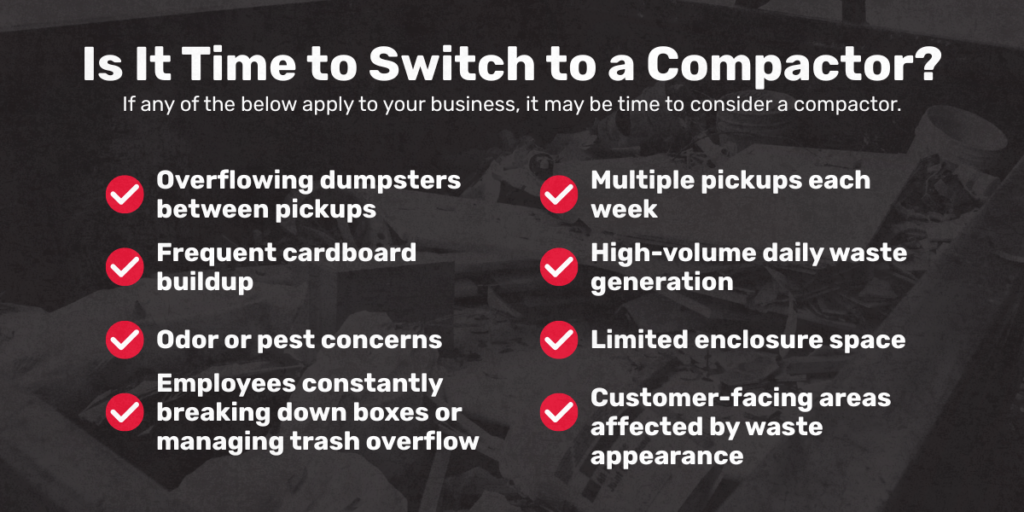
Choosing between a dumpster and a compactor often comes down to how a business operates daily. Before selecting a waste solution, businesses should evaluate several important factors, including:
- Waste Volume: Businesses producing large amounts of trash or cardboard consistently may benefit from the efficiency of a compactor, while companies with lower or more predictable waste output may find dumpsters more practical.
- Type of Waste: Bulky construction debris and demolition materials are often better suited for roll off dumpsters, while compactors are commonly used for cardboard, packaging materials and general commercial waste.
- Available Space: Roll off dumpsters may require additional clearance for delivery trucks, while compactors often require dedicated installation space and electrical access.
- Pickup Frequency and Costs: Businesses requiring multiple weekly pickups may benefit from a compactor’s ability to reduce waste volume and hauling frequency over time.
- Cleanliness and Appearance: Companies concerned about overflowing dumpsters, odors or pest issues may prefer compactors because they help create cleaner, more organized waste areas.
- Signs Your Business May Have Outgrown a Dumpster: Businesses dealing with frequent overflow, limited enclosure space or increasing waste volume may find that a compactor provides a more efficient long-term solution.
Frequently Asked Questions
How much does a commercial compactor vs. a dumpster cost?
The cost of a dumpster or compactor depends on several factors, including container size, waste volume, pickup frequency and the type of materials being disposed of. Traditional dumpsters typically involve lower upfront costs and may be the more economical option for businesses with lower or moderate waste output. Compactors generally require a larger investment or rental cost because of the equipment and installation requirements, but businesses generating high volumes of waste may reduce hauling frequency and long-term operational costs over time.
Is a compactor more cost-effective than a dumpster?
For some businesses, yes. Companies generating large amounts of trash or cardboard consistently may save money by reducing the number of pickups needed each month. However, businesses with lower or fluctuating waste volume may find that traditional dumpster service remains the more practical and cost-effective solution. The best option often depends on waste output, available space and long-term operational needs.
What permits or space requirements are needed?
Space requirements vary depending on the type and size of the waste container. Roll off dumpsters require enough clearance for delivery trucks and safe loading access, while compactors may require dedicated installation space and electrical hookups. Some municipalities or commercial properties may also require permits or approval for dumpster placement. Working with an experienced waste management provider can help businesses determine what requirements apply to their property.
Can businesses recycle while using dumpsters or compactors?
Yes. Many businesses use recycling programs alongside traditional waste collection to reduce landfill waste and improve sustainability efforts. Depending on the business and materials being generated, separate containers may be used for cardboard, paper, plastics or other recyclable materials.
How often are dumpsters and compactors emptied?
Pickup schedules depend on the amount of waste a business generates and the type of container being used. Some businesses require multiple pickups each week, while others may only need occasional service. Because compactors compress waste, they can often hold more material and reduce how frequently pickups are needed compared to traditional dumpsters.
How do I know which waste solution is right for my business?
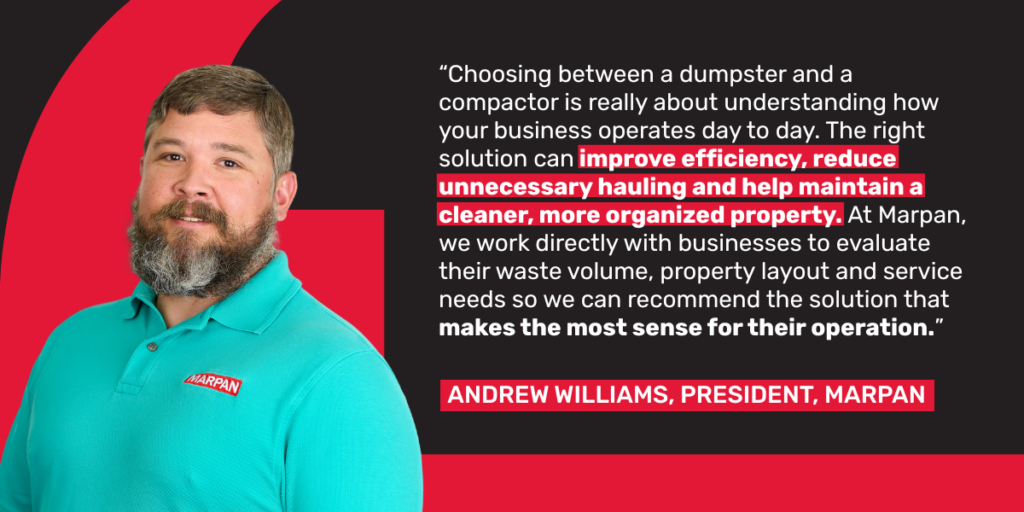
The right waste solution depends on several factors, including waste volume, the type of materials being disposed of, available space and operational needs. Businesses dealing with overflowing dumpsters, frequent pickups or high volumes of cardboard and packaging waste may benefit from upgrading to a compactor. Marpan works with businesses throughout North Florida to evaluate waste management needs and recommend solutions that support efficiency, cleanliness and long-term operations.
About Marpan
Whether a business needs a dumpster, roll off container or compactor, having the right waste management system in place can improve efficiency, cleanliness and day-to-day operations. Since 1966, Marpan has helped businesses throughout Tallahassee and North Florida manage commercial waste through customized container solutions, recycling services and debris management.
With decades of experience and a state-of-the-art recycling facility that has recovered more than two billion pounds of material between 2008 and 2022, Marpan works with businesses to recommend waste solutions that support both operational needs and long-term sustainability goals. Contact Marpan to learn more about commercial dumpsters, roll off containers and compactor solutions for your business.